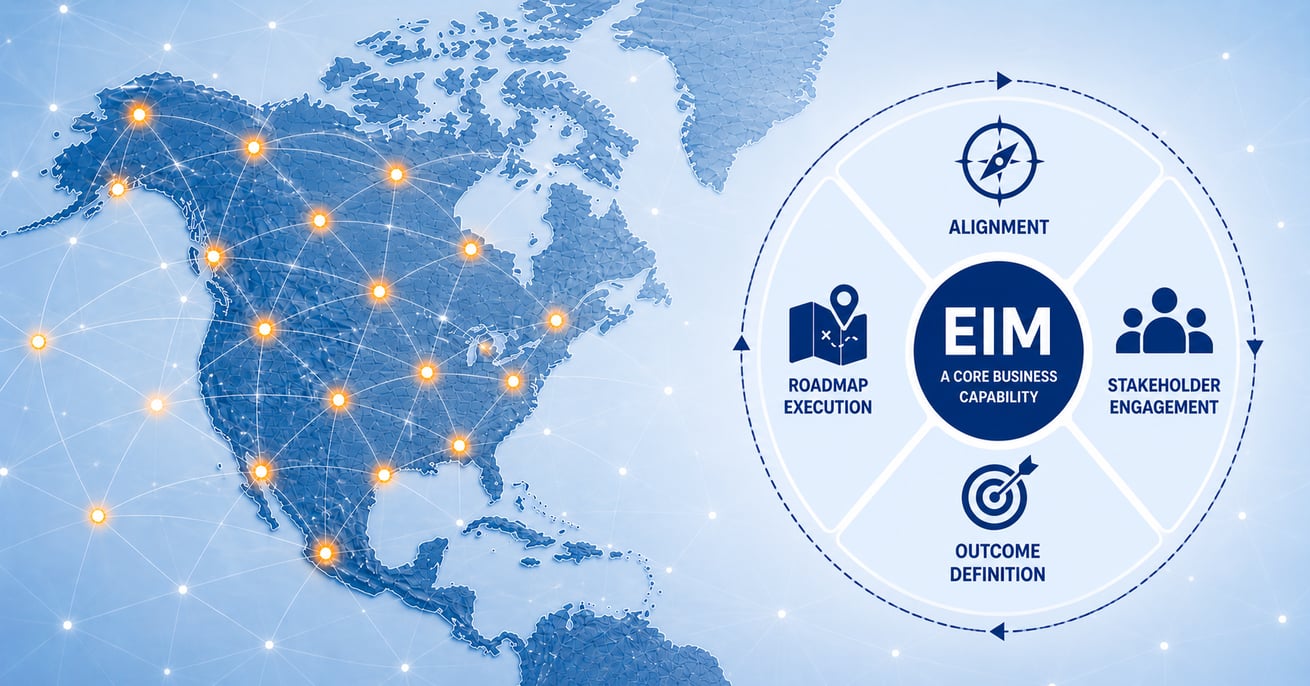
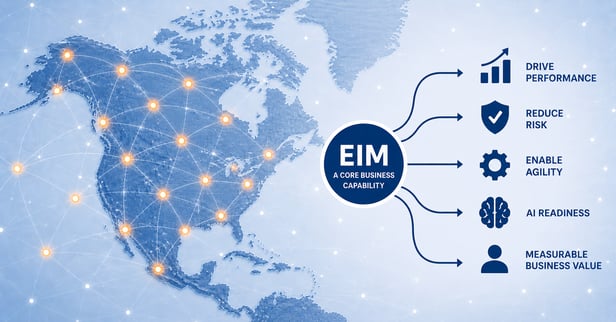
A Practical Framework for Aligning Stakeholders, Reducing Risk, and Building a Roadmap for Digital Transformation and AI Readiness
Most organizations do not realize they have an information problem until business performance begins to degrade.
Enterprise Information Management is not a technology initiative. It is a business capability. When organizations struggle with slow decisions, audit exposure, redundant systems, or stalled AI initiatives, the root cause is often the same: critical business content is fragmented, unmanaged, and disconnected from operational priorities.
Information problems rarely fail loudly. Instead, they silently erode performance through slower decisions, inconsistent reporting, operational friction, and increasing risk.
An effective EIM strategy creates structure, accountability, and a clear path forward. It aligns executive priorities with operational execution and transforms information chaos into a measurable roadmap for improvement.
This article is part of Alitek’s Enterprise Information Management series:
Part 1: Why Enterprise Information Management Matters
Part 2: The Business Value of Enterprise Information Management
▶ Part 3: How to Define an Enterprise Information Management Strategy
This article focuses on how successful organizations align stakeholders, establish governance, and create a practical roadmap for execution.
What Is an Enterprise Information Management Strategy?
An Enterprise Information Management strategy is a structured approach for aligning information, governance, technology, and business priorities to improve performance, reduce risk, and support transformation initiatives.
An effective EIM strategy helps organizations:
- Align stakeholders around shared objectives
- Prioritize information challenges
- Improve governance and compliance
- Modernize platforms and processes
- Create a roadmap for AI readiness and digital transformation
Without a strategy, information management evolves through disconnected systems, inconsistent governance, and informal workarounds.
Over time, these challenges compound into operational inefficiencies, compliance exposure, and reduced confidence in enterprise systems.
What Does a Successful EIM Strategy Require?
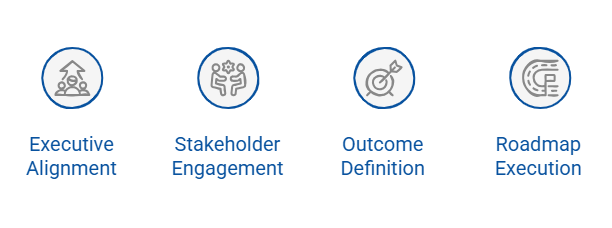
EIM initiatives rarely fail because of technology. They fail because sponsorship, ownership, alignment, and adoption break down.
Success Factor
|
Why It Matters
|
|
Executive Alignment
|
Connects EIM to business performance, risk reduction, transformation initiatives, and AI readiness.
|
|
User Adoption
|
Ensures systems and processes improve work rather than create friction.
|
|
Stakeholder Engagement
|
Reduces blind spots, strengthens governance, and improves long-term adoption.
|
|
Clear Business Outcomes
|
Keeps the strategy focused on measurable business value rather than technology selection.
|
|
Measurement and Validation
|
Demonstrates results and protects executive sponsorship over time.
|
Organizations that approach EIM as a business capability rather than a technology project are significantly more likely to achieve long-term success.
Define Outcomes Before Designing Solutions
Many EIM initiatives begin with platform selection. That approach is backward.
Technology alone does not solve information problems. Without clear outcomes, organizations risk modernizing fragmented processes and scaling inefficiencies into new environments.
An effective EIM strategy:
- Aligns leadership around a shared vision
- Defines priority information challenges
- Quantifies the cost of action and inaction
- Establishes ownership and accountability
- Connects information initiatives to business outcomes
Strategy should determine technology direction—not the other way around.
Metrics That Matter
Successful EIM programs establish baseline measurements before implementation.
Common metrics include:
✅ Process cycle times
✅ Audit preparation effort
✅ Information retrieval time
✅ User adoption
✅ Compliance performance
✅ Operational efficiency improvements
Measurement validates business value, protects executive sponsorship, and helps organizations prioritize future investments.
Without measurable outcomes, EIM becomes difficult to sustain.
The Four-Phase EIM Roadmap Methodology
Unstructured EIM efforts often reinforce the fragmentation they are intended to solve. A repeatable methodology creates discipline, reduces risk, and strengthens alignment throughout the program lifecycle.

Phase
|
Purpose
|
Executive Question
|
|
Discover
|
Define vision, scope, business drivers, stakeholders, and current-state maturity.
|
Are the vision, scope, and business drivers aligned?
|
|
Explore
|
Gather requirements, identify systems, processes, ownership, and dependencies.
|
Have critical needs and stakeholder requirements been identified?
|
|
Plan
|
Define the future-state operating model, conceptual architecture, metrics, and roadmap priorities.
|
Is the future state achievable and aligned to strategic objectives?
|
|
Map
|
Create executable initiatives, timelines, resource plans, dependencies, and change management activities.
|
Is the organization prepared to execute successfully?
|
The methodology is intentionally designed to move organizations from alignment to execution while maintaining focus on business outcomes.
Strategy Is the Bridge Between Chaos and Control
Every organization has an Enterprise Information Management model, whether intentionally designed or not.
Without a strategy, information management evolves through disconnected systems, inconsistent governance, and informal workarounds.
The challenge is that information problems rarely appear all at once. They accumulate quietly through operational friction, inconsistent reporting, rising compliance exposure, and declining trust in enterprise systems.
Defining an EIM strategy is not an academic exercise. It is a practical step toward operational control, regulatory resilience, and scalable transformation.
A defined strategy replaces fragmentation with structure, aligns stakeholders around shared outcomes, and transforms information from an operational burden into a strategic asset.
Organizations that invest the time to define their strategy before selecting technology are better positioned to modernize platforms, improve governance, support AI initiatives, and achieve sustainable business value.
An Enterprise Information Management strategy is a structured framework for aligning information, governance, technology, and business priorities to improve performance, reduce risk, and support transformation initiatives.
Executive alignment ensures that EIM is connected to business priorities, funded appropriately, and supported throughout implementation. Without sponsorship, initiatives often lose momentum.
An EIM roadmap should define business objectives, governance requirements, future-state architecture, prioritized initiatives, resource requirements, timelines, success metrics, and change management considerations.
AI depends on trusted, governed, and accessible information. An EIM strategy establishes the information foundation necessary for successful analytics, automation, and AI initiatives.
Understanding the importance of Enterprise Information Management is only the first step. Real value comes from translating strategy into execution.
Organizations that align stakeholders, define measurable outcomes, and establish a phased roadmap are better positioned to reduce risk, improve performance, modernize information platforms, and prepare for AI-enabled growth.
The next step is building a practical plan tailored to your organization’s priorities and maturity level.