How EIM Improves Performance, Reduces Risk, and Creates a Foundation for AI Readiness
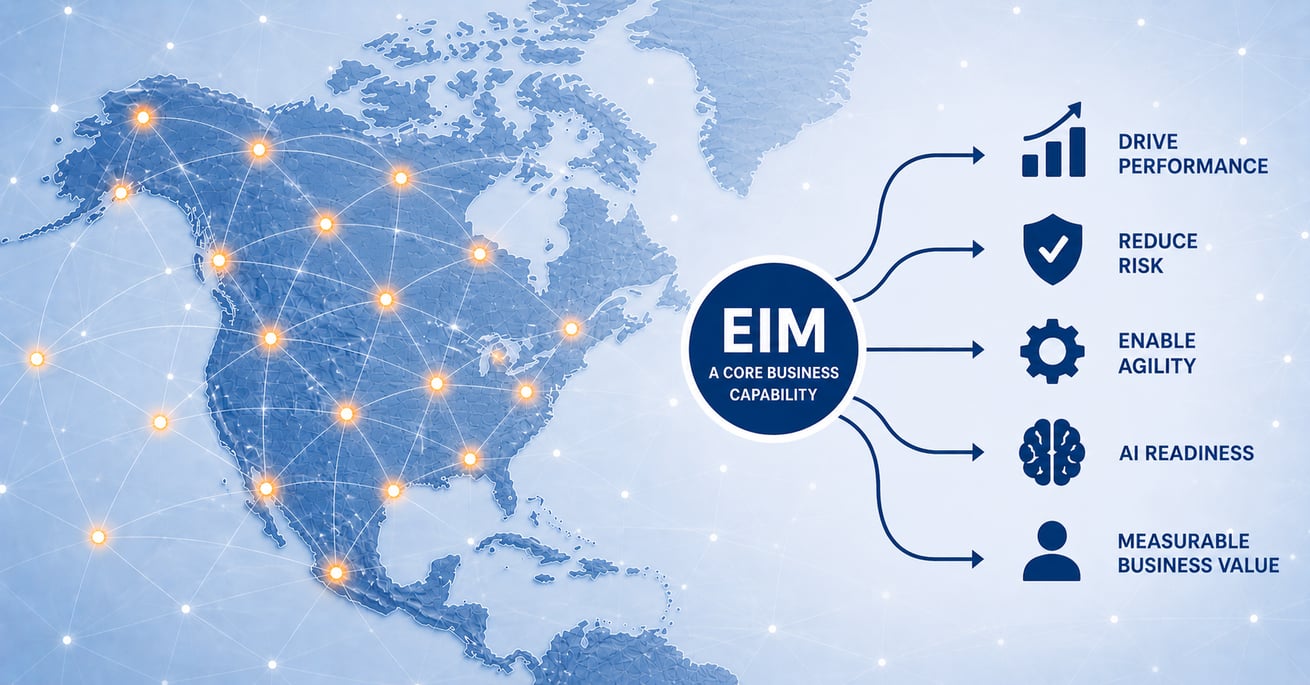
Enterprise Information Management (EIM) is no longer about organizing documents or consolidating systems. It is a strategic business capability that improves operational performance, reduces risk, strengthens compliance, and prepares organizations for AI-enabled growth.
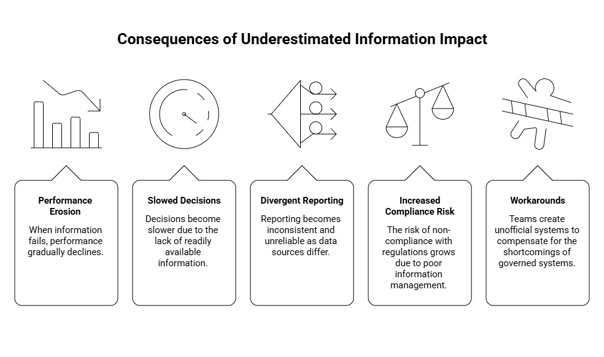
Its impact is often underestimated because information failure rarely happens all at once. Instead, performance erodes over time. Decisions slow. Reporting becomes inconsistent. Compliance risk increases. Teams create workarounds outside governed systems.
The value of EIM becomes clear when viewed through three lenses: the business pressures driving urgency, the hidden cost of fragmented information, and the measurable returns of managing information as a strategic asset.
If you’re new to Enterprise Information Management, start with our guide, Why Enterprise Information Management Matters More Than Ever, which explains how EIM supports governance, digital transformation, operational performance, and AI readiness.
This article focuses on the business case for EIM, including the operational, financial, and strategic benefits of treating information as a managed enterprise asset.
This article is part of Alitek’s Enterprise Information Management series:
Part 1: Why Enterprise Information Management Matters
▶ Part 2: The Business Value of Enterprise Information Management
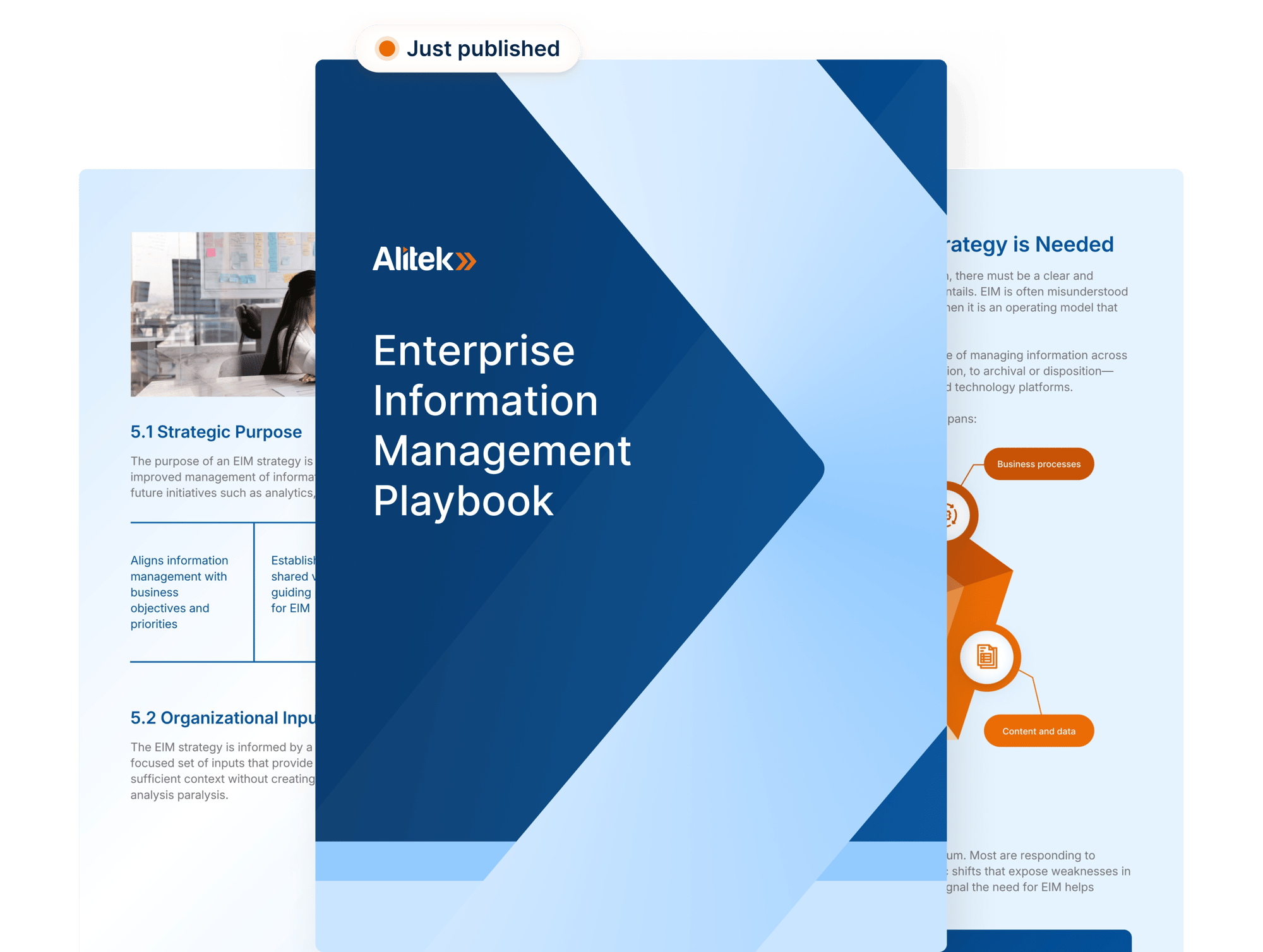
Part 3: How to Define an Enterprise Information Management Strategy
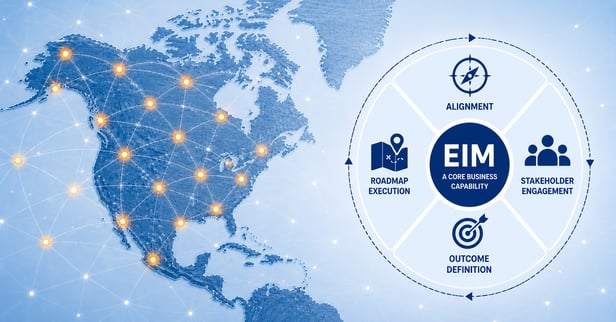
This article focuses on how successful organizations align stakeholders, establish governance, and create a practical roadmap for execution.
What Business Drivers Create the Need for EIM?
Enterprise Information Management initiatives succeed when tied to real business pressures rather than abstract maturity goals. These drivers create urgency because they directly affect cost, risk, and growth.

Business Driver
|
Impact on the Organization
|
|
Business Process Efficiency
|
Manual workflows, duplicate effort, and inconsistent information increase cycle times and operational cost. When information is aligned to standardized processes, automation becomes viable and execution improves.
|
|
Content Security and Compliance
|
Fragmented governance creates compliance risk, inconsistent access controls, and audit challenges. EIM improves policy enforcement, visibility, and accountability.
|
|
Application Sprawl
|
Multiple repositories increase complexity, cost, and uncertainty around authoritative information. EIM helps rationalize systems and reduce redundancy.
|
|
AI and Analytics Readiness
|
AI requires trusted, governed, and accessible information. Without it, organizations risk amplifying existing information quality issues.
|
|
Technology Modernization
|
Legacy systems increase maintenance costs and make modernization initiatives more difficult. EIM provides a governance framework that supports transformation while reducing risk.
|
Business Process Impact
Inefficient processes are often symptoms of unmanaged information. Manual workflows slow cycle times, increase errors, and force employees to spend time searching, validating, and reconciling instead of executing. When information flows through standardized processes, automation becomes viable, cycle times shrink, rework declines, and visibility improves.
In regulated industries, these inefficiencies carry direct financial risk. In one engagement, streamlining the review and update process for critical oil and gas regulatory documents enabled the client to avoid multi-million dollar exposure related to potential penalties and production disruption.
What Are the Signs Your Organization Needs an EIM Program?
Organizations often recognize the need for Enterprise Information Management when information challenges begin affecting business performance, compliance, and decision-making.
Warning Sign
|
What It Indicates
|
|
Inconsistent reporting across departments
|
Information quality, governance, or process alignment issues.
|
|
Low user adoption of enterprise platforms
|
Poor alignment between systems, information architecture, and business processes.
|
|
Duplicate content stored in multiple systems
|
Lack of authoritative information sources and inconsistent governance practices.
|
|
Audit findings and compliance concerns
|
Gaps in information governance, retention, security, or accountability.
|
|
Difficulty supporting AI and analytics initiatives
|
Information quality, accessibility, and governance issues that limit technology effectiveness.
|
|
Excessive time spent searching for information
|
Inefficient information architecture and poor content discoverability.
|
|
Multiple repositories supporting the same business process
|
Application sprawl, information fragmentation, and increased operational complexity.
|
These symptoms typically indicate underlying information management challenges rather than isolated technology issues. Addressing them systematically through an Enterprise Information Management strategy can improve operational performance, reduce risk, and create a stronger foundation for digital transformation and AI initiatives.
The Cost of Not Having an Enterprise Information Management Strategy
The absence of an EIM strategy creates real and compounding cost. It rarely appears as a single line item, but accumulates across the business through delays, rework, risk exposure, and missed opportunity.

Area of Impact
|
Business Consequence
|
|
User and Customer Friction
|
Slower service delivery, delayed responses, reduced productivity, and weaker customer experiences.
|
|
Business Risk
|
Increased compliance exposure, audit challenges, inconsistent decision-making, and legal risk.
|
|
Financial Impact
|
Higher operating costs, delayed revenue recognition, redundant technology spending, and increased discovery costs.
|
In many organizations, these costs are distributed and difficult to isolate, but they compound over time. Left unaddressed, fragmented information becomes a persistent financial drag.
Real-World Impact
The business value of Enterprise Information Management is often realized in different ways depending on an organization’s priorities and challenges.
In some cases, the value comes from reducing risk. For example, streamlining the review and update process for critical oil and gas regulatory documents helped one organization avoid multi-million-dollar exposure related to potential penalties and production disruption.
In other cases, the value comes from improving operational efficiency and accelerating business outcomes. For an oil and gas manufacturer, automating the generation of manufacturing data books accelerated revenue recognition by several months on multi-million-dollar projects.
While the business drivers differed, both organizations achieved measurable results by improving the quality, accessibility, and governance of information.
Enterprise Information Management as a Strategic Business Investment
Enterprise Information Management should not be viewed as a technical cleanup effort. It is a business performance strategy.
When business drivers are clearly defined, the cost of inaction is quantified, and value is measured across financial, operational, and strategic dimensions, EIM becomes a catalyst for enterprise acceleration.
It shortens decision cycles, strengthens compliance posture, reduces technology redundancy, and prepares the organization for AI-enabled growth.
Organizations that invest in EIM do more than organize information. They create a disciplined foundation that supports smarter decisions, faster execution, measurable ROI, and sustainable competitive advantage.
Enterprise Information Management Delivers Measurable Business Outcomes
Organizations with mature EIM capabilities often experience:
✅ Faster decision-making
✅ Improved compliance and audit readiness
✅ Reduced technology complexity
✅ Greater confidence in analytics and reporting
✅ Increased operational efficiency
✅ Better support for AI and automation
✅ Reduced enterprise risk
✅ Stronger organizational agility
The value of EIM is not simply better information management. It is improved business performance enabled by trusted, accessible, and governed information.
Frequently Asked Questions About Enterprise Information Management Programs
What are the benefits of an EIM program?
Enterprise Information Management improves operational efficiency, reduces risk, strengthens compliance, supports digital transformation, and prepares organizations for AI initiatives.
How does EIM reduce business risk?
EIM establishes governance, retention policies, access controls, and accountability frameworks that reduce compliance, legal, and operational risk.
Why is EIM important for AI readiness?
AI depends on trusted, governed, and accessible information. EIM provides the information foundation necessary for reliable AI, automation, analytics, and knowledge management initiatives.
How can organizations measure ROI from EIM?
Organizations typically measure EIM success through reduced operational costs, improved productivity, stronger compliance outcomes, accelerated decision-making, lower technology spend, and improved business process performance.
Continue the Journey
Understanding the business value of Enterprise Information Management is important. Defining a strategy that turns those benefits into measurable outcomes is where transformation begins.
Read How to Define an Enterprise Information Management Strategy to learn how successful organizations align stakeholders, establish governance, and create a practical roadmap for execution.