How fragmented information creates compounding cost, and how EIM unlocks measurable business value
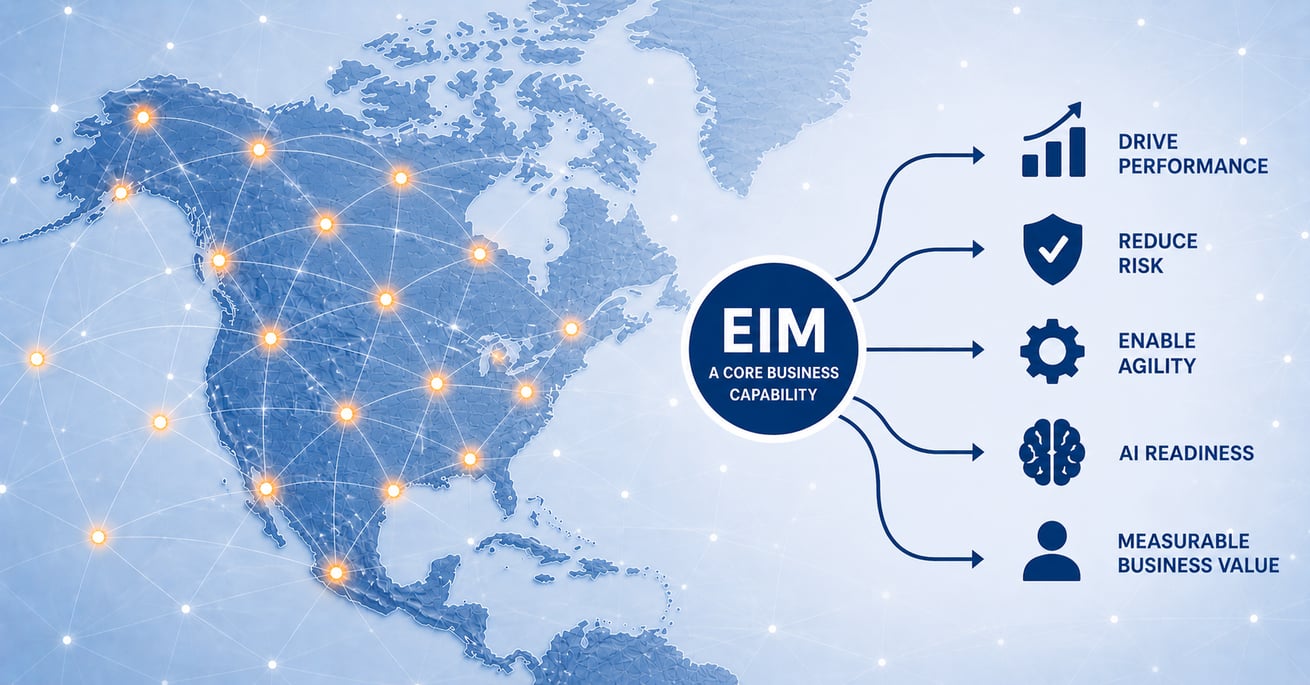
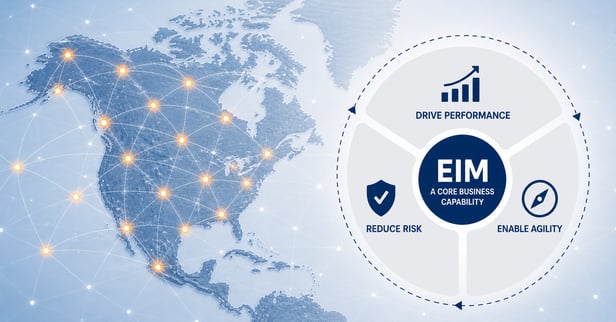
Enterprise Information Management (EIM) is no longer about organizing documents or consolidating systems. It is a direct driver of business performance, influencing operational efficiency, regulatory risk, decision quality, and the organization’s ability to scale AI.
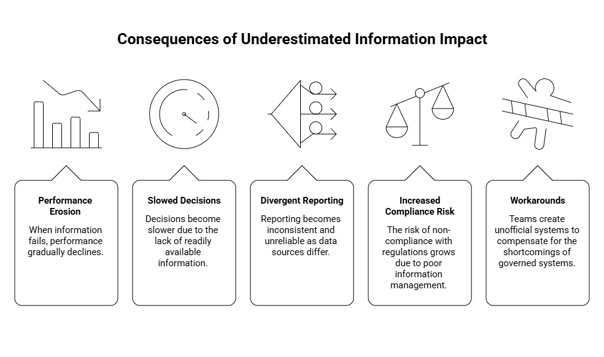
Its impact is often underestimated because information failure rarely happens all at once. Instead, performance erodes over time. Decisions slow. Reporting becomes inconsistent. Compliance risk increases. Teams create workarounds outside governed systems. The value of EIM becomes clear when viewed through three lenses: the business pressures driving urgency, the hidden cost of fragmented information, and the measurable returns of managing information as a strategic asset.
Core Business Drivers of Enterprise Information Management (EIM)
EIM initiatives succeed when tied to real business pressures, not abstract maturity goals. These drivers create urgency because they directly affect cost, risk, and growth.

Business Process Impact
Inefficient processes are often symptoms of unmanaged information. Manual workflows slow cycle times, increase errors, and force employees to spend time searching, validating, and reconciling instead of executing. When information flows through standardized processes, automation becomes viable, cycle times shrink, rework declines, and visibility improves.
In regulated industries, these inefficiencies carry direct financial risk. In one engagement, streamlining the review and update process for critical oil and gas regulatory documents enabled the client to avoid multi-million dollar exposure related to potential penalties and production disruption.
Content Security and Compliance
Regulatory pressure continues to increase, requiring organizations to protect sensitive information and apply consistent, defensible retention practices. Without coordination, access controls become fragmented and policies are applied inconsistently.
In many organizations, similar content is governed differently across systems, with limited visibility into access. EIM centralizes governance, ensuring the right access, consistent policy enforcement, and full auditability—reducing compliance risk and strengthening control over enterprise information.
Application Sprawl
Most organizations accumulate overlapping systems and repositories over time, driving higher costs, increased complexity, and reduced trust in enterprise information. As a result, many enterprises maintain multiple content platforms supporting the same business processes, creating duplication and uncertainty around the authoritative source of information.
EIM rationalizes this landscape by aligning repositories under shared governance and metadata standards, reducing redundancy and restoring control.
AI and Analytics Readiness
AI depends on trusted, accessible, and well-governed information. Poor data quality and disconnected systems undermine outcomes. In early AI initiatives, organizations often discover that a significant portion of their content is incomplete, inconsistently classified, or not usable without manual intervention.
EIM provides the structured foundation required for AI at scale. Without it, AI amplifies existing issues instead of delivering insight.
Technology Debt and Modernization
Legacy systems become costly to maintain and difficult to integrate. Organizations frequently find that critical business content is deeply embedded in aging systems, making migrations slower, more expensive, and harder to govern. In a recent engagement, we assisted a client in retiring 12 legacy applications, significantly reducing platform overhead while improving control and visibility across their information landscape.
EIM decouples information from applications through a defined operating model and governance framework. This enables system modernization without losing control of content or increasing risk.
The Cost of Not Having an Enterprise Information Management Strategy
The absence of an EIM strategy creates real and compounding cost. It rarely appears as a single line item, but accumulates across the business through delays, rework, risk exposure, and missed opportunity.

User and Customer Friction
When information is unmanaged, friction becomes part of daily work. Each inefficiency extends cycle times and slows execution. Over time, productivity erodes as employees spend more time managing information than using it.
Customers feel the impact through delayed responses, inconsistent communication, and slower service delivery. These gaps weaken trust and reduce competitive differentiation.
Business Risk
Information gaps translate directly into enterprise risk. Decisions are made with incomplete or conflicting data. Audit preparation becomes manual and time-intensive. Legal exposure increases when records are missing or improperly retained.
As regulatory pressure increases, the likelihood and impact of compliance failures grows. What begins as an information issue can quickly become a financial and reputational event.
Financial Impact
Operational inefficiencies increase the cost of delivery. Revenue is delayed when documentation is incomplete. Discovery and legal costs rise when information is difficult to locate. Technology expenses grow as redundant systems accumulate.
In capital-intensive industries, these delays can have a direct impact on cash flow. In one engagement, automating the generation of manufacturing data books for an oil and gas manufacturer accelerated revenue recognition by several months on multi-million dollar projects.
In many organizations, these costs are distributed and difficult to isolate, but they compound over time. Left unaddressed, fragmented information becomes a persistent financial drag.
Doing nothing is not neutral. It is a decision to absorb ongoing cost, risk, and inefficiency.
Enterprise Information Management as a Strategic Business Investment
Enterprise Information Management should not be viewed as a technical cleanup effort. It is a performance strategy.
When business drivers are clearly defined, the cost of inaction is quantified, and value is measured across financial, operational, and strategic dimensions, EIM becomes a catalyst for enterprise acceleration. It shortens decision cycles, strengthens compliance posture, reduces technology redundancy, and prepares the organization for AI enabled growth.
Organizations that invest in EIM do more than organize information. They create a disciplined foundation that supports smarter decisions, faster execution, measurable ROI, and sustainable competitive advantage.